Spices are more than just flavor enhancers. In every cuisine, they play a powerful role in shaping how food tastes, looks, and even feels in the mouth. A pinch of turmeric can transform a dish’s color, cumin can add warmth and depth, and mustard seeds can change texture with their crackle and bite. Understanding how individual spices influence taste, color, and texture allows home cooks to move beyond recipes and cook with intention.
This deeper awareness is what separates routine cooking from truly flavorful, balanced food.
The Role of Spices in Building Taste
Taste is the most obvious contribution of spices, but it’s also the most complex. Spices influence not just one flavor note but a layered combination of sensations.
Heat and Pungency
Chili, black pepper, and ginger introduce heat in different ways. Chili delivers a lingering burn, black pepper provides sharp, quick warmth, and ginger creates a fresh, spicy bite. Each activates the palate differently, affecting how rich or light a dish feels.
Bitterness and Earthiness
Spices like fenugreek, turmeric, and mustard seeds add subtle bitterness that balances sweetness and richness. Without these elements, many dishes can feel flat or overly heavy.
Sweet and Warm Notes
Cinnamon, cloves, nutmeg, and cardamom add warmth and mild sweetness. These spices enhance desserts but are equally important in savory dishes, where they round off sharp flavors and add depth.
How Spices Shape Color on the Plate
Color plays a major role in how we perceive food before tasting it. Spices are among the most powerful natural coloring agents in cooking.
Turmeric and Paprika
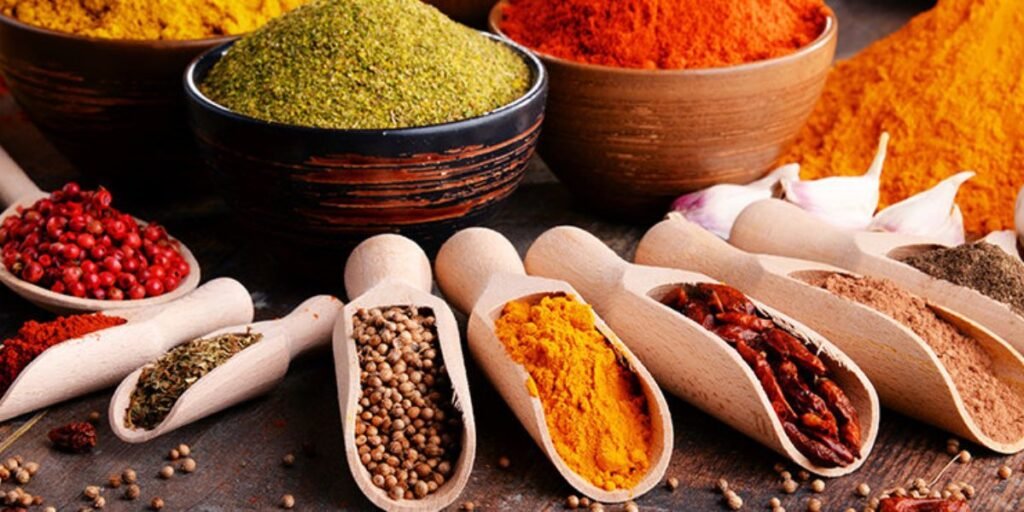
Turmeric gives food a bright yellow to golden hue, instantly making dishes look rich and vibrant. Paprika, depending on the variety, can range from deep red to smoky orange, influencing both appearance and expectation of flavor.
Saffron and Annatto
Saffron adds a delicate golden tint along with a subtle aroma, often associated with luxury and celebration. Annatto seeds, used in many global cuisines, provide a warm orange-red color without overwhelming flavor.
Dark Spices and Roasting
Spices like cumin, coriander, and cloves deepen in color when roasted. This browning not only intensifies flavor but also contributes to a richer visual tone, making gravies and dry dishes look fuller and more appetizing.
Texture: The Often-Overlooked Impact of Spices
While taste and color get most of the attention, spices also influence texture in surprising ways.
Whole vs Ground Spices
Whole spices such as mustard seeds, fennel, and cumin add crunch when tempered in oil. Their popping and crackling release aroma while introducing subtle textural contrast. Ground spices, on the other hand, dissolve into the dish, thickening sauces and creating a smoother mouthfeel.
Thickening and Binding
Certain spices naturally thicken food. Ground coriander, dried ginger, and spice blends like garam masala help bind gravies, giving them body without the need for additional starch.
Drying and Absorbing Moisture
Spices such as chili powder and black pepper absorb moisture during cooking, which can slightly dry out food if overused. Used correctly, they help achieve the right balance between saucy and dry textures.
Timing Matters: When Spices Are Added
The stage at which spices are introduced has a major impact on their effect.
Blooming in Oil
Heating spices in oil releases fat-soluble compounds, intensifying aroma and flavor. This technique is essential for spices like cumin, mustard seeds, and cloves.
Mid-Cooking Addition
Spices added during simmering mellow over time. Turmeric and coriander become softer and more integrated, contributing color and background flavor rather than sharpness.
Finishing Touch
Spices added at the end, such as garam masala or freshly ground pepper, remain bright and aromatic, influencing the final taste without altering texture much.
Balancing Spices for Harmony
No single spice works alone. The real magic happens in balance. Too much heat can overpower subtle flavors, while excessive bitterness can dull sweetness. Skilled cooking involves understanding how spices interact with ingredients like fats, acids, and sugars.
For example, turmeric pairs well with fats to enhance color, while acidic ingredients like lemon or tomato help cut through spice-heavy dishes, restoring balance.
Cooking With Awareness, Not Just Recipes
When you understand how individual spices influence taste, color, and texture, cooking becomes intuitive rather than mechanical. Recipes turn into guidelines instead of rules, and adjustments become easier.
Spices are not just about making food spicy. They define character, mood, and identity in cooking. Learning how each one behaves allows you to cook with confidence, creativity, and control—transforming everyday meals into thoughtful, well-balanced dishes.